- Plot No: 22, Super Market, Kalaburagi
- Mon - Sat 8.00 - 18.00. Sunday CLOSED

About Sports Medicine
Sports medicine is a special area of healthcare focusing on the diagnosis, treatment, and prevention of injuries stemming from physical activity, exercise, and sports. It doesn’t matter whether you are a professional athlete or just a weekend jogger; the physical demands of sports lead to all sorts of injuries, from acute conditions, such as sprains and fractures, to chronic issues, such as tendonitis and stress fractures.
In addition to injury treatment, sports medicine professionals also seek the enhancement of performance through conditioning and rehabilitation programs. Their professional expertise encompasses orthopaedics, physical therapy, nutrition, and even psychology in all attempts to keep the athlete’s body and mind fit. Advancements in technology and medical sciences, such as wearable devices for injury prevention and recovery, have made this field more dynamic and individualised.
As the importance of leading an active lifestyle becomes higher, sports medicine contributes crucially to recovery from injuries but also educates its athletes on how to stay injury-free while maximising their potential.
What is sports medicine?
Sports medicine is one of the branches of medicine that aims to focus on physical fitness, especially the prevention and care of injuries associated with sports and other exercises. Unlike general medicine, which has nothing to do with the injuries incurred from physical activities and sports, sports medicine takes care of patients with disorders resulting from the application of physical exertion. It is typically a multidisciplinary area of practice since it involves not only physicians but also physical therapists, orthopaedic surgeons, athletic trainers, and nutritionists.
Sports medicine specialists have proficient knowledge about the musculoskeletal system, comprising bone, muscles, ligaments, and tendons. These are the areas vulnerable to injury after physical exertion. These specialists are also experts in improving athletic performance and minimising injuries.
Most orthopaedic hospitals serve as sports medicine centres and offer the finest technology for diagnosing, treating, and rehabilitating injuries that accrue from participation in sports. Their treatments include the restoration of athletes and non-athletes to maximise their activity levels.
Which diseases are treated by sports medicine experts?
Musculoskeletal disorders/injuries:
1. Sprains and strains: Injuries that cause overstretching or tearing of ligaments, such as sprains, and of muscles or tendons.
2. Fractures: Splitting of bone parts due to an impact or stress.
3. Dislocations: Joints are forcibly removed from their usual position.
4. Tendon injuries: These encompass tendinitis or inflammation and ruptures to the tendons.
These may be the Achilles tendon, patellar tendon, or rotator cuff
5. Cartilage damage: Examples include meniscus tears in the knee or labral tears in the shoulder or hip.
6. Overuse injuries: Stress fractures, shin splints, and bursitis due to repetitive stress.
Disorders of joint:
1. Osteoarthritis: Degenerative joint disease common in athletes who have had either a high impact or repetitive motion.
2. Rheumatoid arthritis: Joint inflammation, a particular condition requiring special management if the patient is an athlete
Infections:
1. Athlete’s foot: Fungal infection mainly causing disease in the feet.
2. MRSA: MRSA stands for Methicillin-Resistant Staphylococcus aureus. It refers to a very dangerous skin infection associated with contact sports.
What are the signs and symptoms of sports injuries?
1. Pain
2. Swelling
3. Bruising and discolouration
4. Limitation of movement
5. Instability
6. Weakness
7. Numbness or tingling
8. Deformity
9. Inability to bear weight
10. Breaking or popping sounds
11. Redness and heat
12. Reduced function
Conclusion
Sports medicine services ensure that people come out of their injuries to resume their usual lifestyles quickly. It is only through early intervention combined with the latest treatment options available in orthopaedic hospitals, such as Adarsh Hospital, that the chances of quick recovery or full retrieval of strength can be guaranteed in cases with either minor sprains or the most severe ligament tear.

Emergency Cases
+91 99641 48001
Our Dedicated Doctor
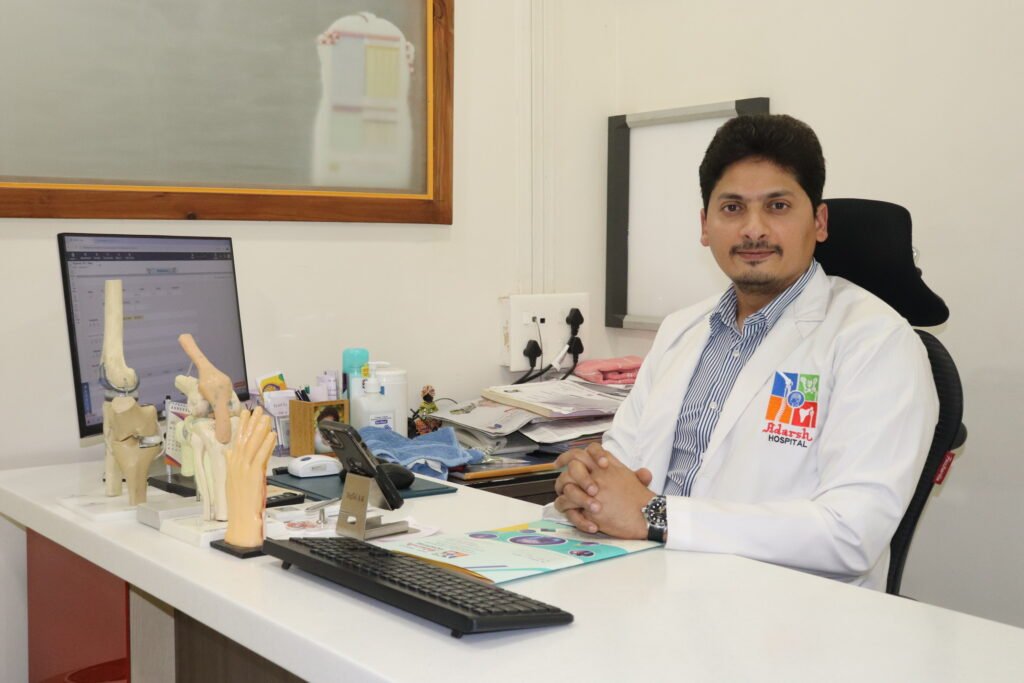
Dr. Alok C. Patil
MS Ortho, FIKS (London)
CONSULTANT ORTHOPAEDICIAN
Our Testimonial
Our Patients
“Well-managed hospital”
Adarsh Hospital was well-managed, and the staff ensured everything went smoothly during our visit. We are fully satisfied with the care and services provided.
Sanjeevkumar KoodiPatient
From first opd consultation to post operative surgery staff cared well, hospital maintenance is well , understanding the disease to patients is soo good thank you dr Alok patil sir.
Kamala BaiPatient
It's my first review after my surgery I have never ever seen one of the best hospital Adarsh hospital which is located in super market in Kalyan karanataka kalburgi region Dr alok is one of the best doctor I request all kalyan people take benifits visit this hospital for better treatment. And with well trained staff people are very friendly good.
Shrikanth BtPatient 
+91 99641 48001
Call us now

Info@adarshhospital.com
Drop us an email

24 X 7 support
We are open on
Quick Links
- About Us
- Make Appointments
- Customer Treatments
- Consulting your health
- Our Doctors Team
Our Services
- Surgery
- Cardiology
- Pediatric
- Anesthesiology
- Psychological
Designed By: Viral Boostup | +91 9110278059
- About Us
- Service
- Privacy