- Plot No: 22, Super Market, Kalaburagi
- Mon - Sat 8.00 - 18.00. Sunday CLOSED


Orthopaedics and Spine Surgery
What is Spine Surgery
Spine surgery is a medical procedure that addresses a wide range of conditions affecting the spinal column, including injuries, deformities, degenerative diseases, and tumors. It includes multiple surgical procedures and approaches tailored to each patient’s specific needs. Spine surgery has become increasingly effective and safer with advancements in medical technology and surgical techniques.
Indications for Spine Surgery
Spine surgery is usually recommended when conservative treatments such as medication, physical therapy, and injections fail to minimize symptoms and affect the patient’s quality of life. Common indications for spine surgery include:
1. Persistent back and neck pain.
2. Pain, numbness, weakness, or tingling in the arms or legs due to nerve compression.
3. Loss of bladder or bowel control.
4. Spinal instability due to fractures and spondylolisthesis.
5. Spinal deformities like scoliosis or kyphosis
Severe spinal trauma, like fractures from accidents or falls.
Spinal tumors or infections
Types of Spine Surgeries
Decompression Surgeries: These relieve pressure on spinal nerves or the spinal cord by removing bone or tissue. This type of surgery is commonly performed for conditions such as spinal stenosis, herniated discs, and foraminal stenosis. Different types of decompression surgeries are as follows:
1. Discectomy: This procedure involves removing a portion of a herniated disc that presses the nerve root or the spinal cord. It aims to reduce pain, numbness, and weakness caused by nerve compression.
2. Laminectomy: Laminectomy involves the removal of a portion of the lamina (the bony arch of the vertebra) to relieve pressure on the spinal cord or nerves.
3. Foraminotomy: This procedure widens the neural foramen (the openings through which spinal nerves exit the spinal canal) to relieve pressure caused by foraminal stenosis or herniated discs.
Fusion Surgeries: These aim to stabilize the spine by fusing two or more vertebrae using bone grafts, screws, rods, or cages. Fusion surgeries are recommended for conditions like degenerative disc disease, spinal instability, spinal deformities, and spinal fractures. Different types of decompression surgeries are as follows:
1. Posterolateral Fusion (PLF): PLF involves the fusion of two or more vertebrae to stabilize the spine, alleviate pain, and correct deformities caused by conditions such as degenerative disc disease, spondylolisthesis, or spinal fractures.
2. Anterior Cervical Discectomy and Fusion (ACDF): ACDF includes accessing the cervical spine (neck) through the front of the neck to remove a damaged disc and fuse the adjacent vertebrae. It is commonly performed to treat cervical disc herniation or degenerative disc disease.
3. Transforaminal Lumbar Interbody Fusion (TLIF): TLIF is a fusion surgery performed on the lumbar spine (lower back) to treat degenerative disc disease, spinal instability, or spondylolisthesis. It involves removing the damaged disc, inserting a bone graft, and fusing the vertebrae.
- Artificial Disc Replacement (ADR): ADR, also known as total disc replacement or disc arthroplasty, replaces a damaged intervertebral disc with an artificial implant.
- Kyphoplasty and Vertebroplasty: These minimally invasive procedures stabilize vertebral compression fractures caused by osteoporosis or trauma. They involve inflating a balloon within the fractured vertebra to restore height and injecting bone cement to stabilize the fracture.
- Spinal Tumor Surgery: This surgery removes tumors or masses affecting the spinal cord or surrounding structures.
Recent Advancements in Spine Surgery
Advancements in medical technology and surgical techniques have revolutionized spine surgery, offering patients safer and more effective treatment options.
1. Robot-Assisted Surgery: Robotic surgeries offer real-time imaging and navigation, allowing spine surgeons to plan and perform procedures with greater precision and accuracy.
2. 3D Printing Technology: 3D printing helps create patient-specific implants, instruments, and models for spine surgery to improve implant fit and stability.
3. Motion-Preserving Technologies: These technologies use artificial disc replacement and dynamic stabilization devices to maintain spinal mobility while addressing degenerative conditions.
4. Biologics and Regenerative Therapies: Biologic agents such as bone morphogenetic proteins (BMPs) and mesenchymal stem cells (MSCs) promote bone healing and tissue regeneration.
From minimally invasive procedures to advanced robot-assisted surgeries, spine surgery is paving the way for more efficient and personalized treatment options. It holds promise for further advancements in patient outcomes and quality of life. Adarsh Hospital, with its team of highly skilled and experienced spine surgeons, is leveraging the advancements in the field to optimize surgical outcomes and minimize the risk of complications, helping patients toward improved spinal health and well-being.

Emergency Cases
+91 99641 48001
Our Dedicated Doctor
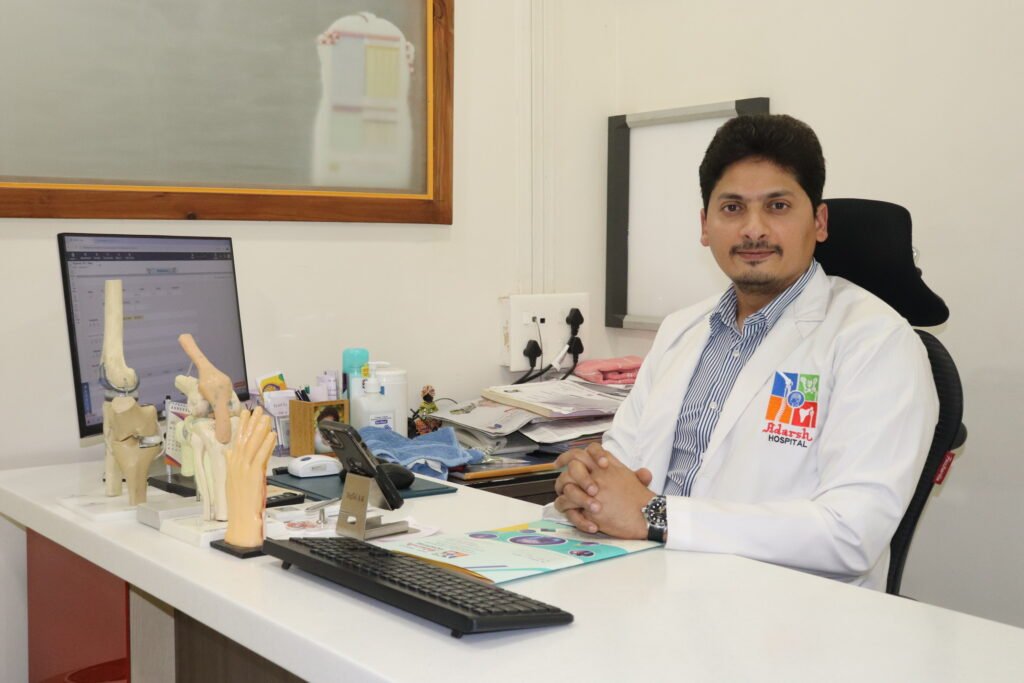
Dr. Alok C. Patil
MS Ortho, FIKS (London)
CONSULTANT ORTHOPAEDICIAN
Our Testimonial
Our Patients
“Well-managed hospital”
Adarsh Hospital was well-managed, and the staff ensured everything went smoothly during our visit. We are fully satisfied with the care and services provided.
Sanjeevkumar KoodiPatient
From first opd consultation to post operative surgery staff cared well, hospital maintenance is well , understanding the disease to patients is soo good thank you dr Alok patil sir.
Kamala BaiPatient
It's my first review after my surgery I have never ever seen one of the best hospital Adarsh hospital which is located in super market in Kalyan karanataka kalburgi region Dr alok is one of the best doctor I request all kalyan people take benifits visit this hospital for better treatment. And with well trained staff people are very friendly good.
Shrikanth BtPatient 
+91 99641 48001
Call us now

Info@adarshhospital.com
Drop us an email

24 X 7 support
We are open on

Quick Links
- About Us
- Make Appointments
- Customer Treatments
- Consulting your health
- Our Doctors Team
Our Services
- Surgery
- Cardiology
- Pediatric
- Anesthesiology
- Psychological
Designed By: Viral Boostup | +91 9110278059
- About Us
- Service
- Privacy