- Plot No: 22, Super Market, Kalaburagi
- Mon - Sat 8.00 - 18.00. Sunday CLOSED

What is Neurology?
Neurology is a branch of medicine that deals with studying and treating disorders of the nervous system. It is a complex, sophisticated system of cells and fibers that controls every function of the human body. With a deep-rooted foundation in both science and clinical practice, neurology plays a significant role in decoding the nervous system and addressing multiple conditions that afflict it.
The nervous system is broadly divided into:
1. Central Nervous System (CNS): It comprises the brain and spinal cord.
2. Peripheral Nervous System (PNS): It comprises the nerves that extend throughout the body. It also includes eyes, ears, skin, and other sensory receptors.
What is neuro and spine surgery?
Neurosurgery is a medical speciality primarily focusing on the diagnosis, surgical treatment, and management of disorders related to the nervous system – brain, spinal cord, and peripheral nerves. Spine surgeries treat the disorders of the spine, comprising the vertebral bones, intervertebral discs, spinal cord, nerves, and associated tissues. These surgeries are done for pain relief, mobility restoration, and to address deformities or injuries of the spine.
Which diseases are treated under neuro and spine surgery?
Neuro and spine surgery addresses a wide variety of neurological and spinal conditions. Some of the most commonly treated diseases include:
1. Brain disorders:
- Benign as well as malignant conditions influence brain function.
- Hydrocephalus – Overproduction and accumulation of cerebrospinal fluid in the brain.
- Aneurysm – Ballooning out of the blood vessels, which causes bleeding in life-threatening circumstances.
- Epilepsy: A neuro condition with symptoms including recurring seizures.
2. Spine disorders:
- Degenerative disc disease is a condition wherein the intervertebral disc deteriorates progressively or with age.
- Herniated disc: This condition is caused by a spinal disc that protrudes out from the normal space. This might cause compression of the nerve, and, as a result, it could lead to pain, numbness, and even weakness. In this particular condition, a discectomy, which is the removal of the bulging part, is performed.
- Spinal stenosis: In this disorder, the spinal canal becomes narrowed, which might lead to the compression of either the spinal cord or the nerves thereby causing pain or other neurological symptoms. The surgical intervention in this case would essentially be laminectomy or foraminotomy to relieve symptomatology.
- Scoliosis and other spinal deformities: Scoliosis or kyphosis are the abnormal curvatures of the spine that can be surgically corrected by spinal fusion or instrumentation to realign and stabilise the spine.
- Spinal fractures and injuries: Trauma to the spine resulting from accidents, falls, or impacts can cause spinal fractures. In severe fractures, surgery is required to stabilise the spine and prevent further spinal injury.
- Spinal tumours: Tumours of the vertebrae, spinal cord, or nerves in the spine might be benign or malignant and might require surgery to remove the tumorous growth and stabilise the spine.
3. Peripheral nerve disorders:
- Peripheral neuropathy: This is caused by damage to the peripheral nerves, causing weakness, numbness, or pain.
- Carpal tunnel syndrome: This is caused by an increased pressure on the median nerve in the wrist, causing numbness and pain.
3. Trauma-related injuries:
- Traumatic brain injury: Traumatic injuries to the brain can occur by blow or jolt to the head, impacting the brain function.
- Spinal cord injuries: This can be a result of accidents or falls leading to varying ranges of paralysis or loss of function.
Signs and symptoms of neuro and spine diseases:
Signs and symptoms of neurological diseases:
1. Headache.
2. Seizures.
3. Memory loss or cognitive impairment.
4. Weakness of paralysis.
5. Sensory changes.
6. Speech and language problems.
7. Loss of coordination and balance.
Benefits of early interventions:
Early intervention in neurological and spinal diseases can make the difference between full recovery or recovery with minimal deficit and the possible risks of complications from these diseases in the later stages. The most important benefits in this regard include:
1. Reduced risk of permanent damage:
Improvement and management of conditions such as nerve compression and abnormal spinal deformities prevent permanent damage to the nervous system.
2. More rapid recovery: Early diagnosis and treatment primarily cut short the time for recovery and improved health status.
3. Improved quality of life: Early treatment would ease the symptoms, such as chronic pain, and this would permit the patients to regain their daily pursuits relatively early in time.
Conclusion
Neuro and spine surgery is a critical area focusing on the treatment of complex neurologic and spinal disorders to make way for life to regain lost functions. Advanced techniques in the multidisciplinary approach by neurosurgeons and spine surgeons provide a variety of treatments for nervous system disorders. Proper care, as is available at Adarsh Hospital, in combination with early intervention, is critical in achieving the best outcomes for those undergoing neuro and spine surgery.

Emergency Cases
+91 99641 48001
Other Treatments
Our Dedicated Doctor
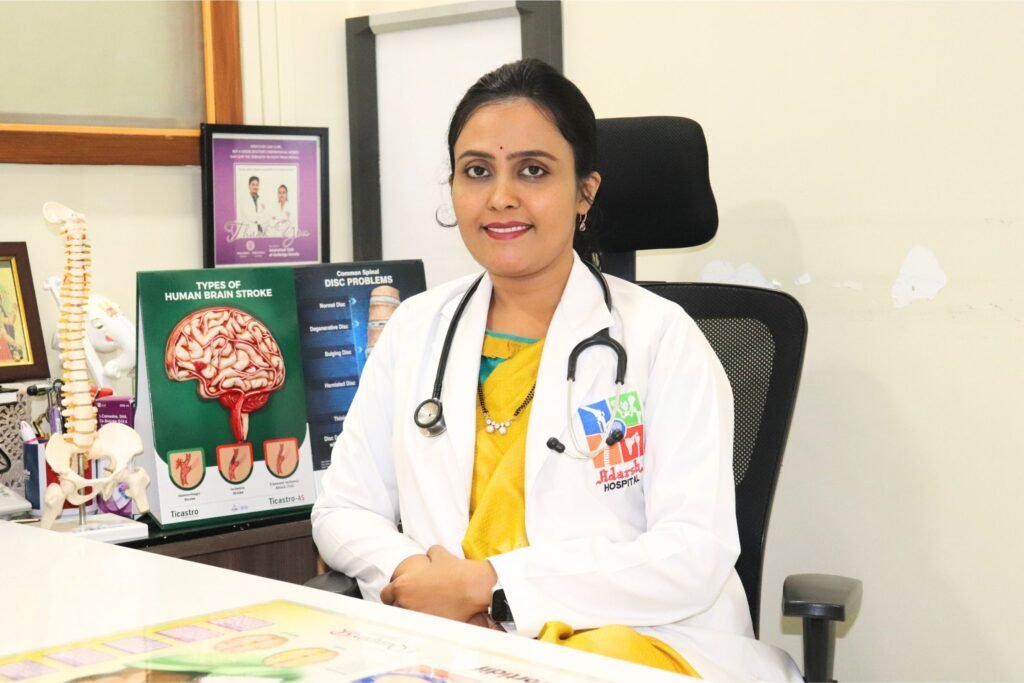
Dr. Shweta A. Patil
MBBS, DNB (Gen Medicine), DrNB Neurology (Mumbai)
CONSULTANT NEURO PHYSICIAN
Our Testimonial
Our Patients

+91 99641 48001
Call us now

Info@adarshhospital.com
Drop us an email

24 X 7 support
We are open on
Quick Links
- About Us
- Make Appointments
- Customer Treatments
- Consulting your health
- Our Doctors Team
Our Services
- Surgery
- Cardiology
- Pediatric
- Anesthesiology
- Psychological
Designed By: Viral Boostup | +91 9110278059
- About Us
- Service
- Privacy